
Categories:
A Recipe for War, Analysis of History, Current Events, Military History, Russo-Ukrainian War, 21st Century Conflicts, The Involvement of the United States in the Russo-Ukrainian War, Annexation, Disinformation, Parallels to World War II, Parallels to Imperial Russia
Tags:
Connections to the Past, Understanding the Past, Current Views, Repercussions of Events, Motives Behind Conflict, #A Recipe for War, #Ukraine, #War, Unending War
November 17, 2022
The first winter snow has already fallen over Russia and Ukraine; in a few weeks, both countries will be almost entirely covered in it. After a record-smashing summer heatwave that at times seemed never-ending, it seems unbelievable that a cold winter is now approaching. Yet that’s precisely what’s happening. The snow and ice will undoubtedly affect how the war will be fought during the next several months, and they could be pivotal in deciding its final outcome. So how will the coming winter influence the course of the war, and could it lead to the first de-escalation of the conflict since the start of the invasion?
Winter has always had a significant impact on the way that wars in this region are fought. Back when the vast steppe of Ukraine was the lawless “Wild Field,” different groups would begin raiding others around the start of the winter season to take food and other resources from them when these were in short supply. When the Swedes tried to invade Russia in the early 1700s, the biting cold destroyed their army. The same thing happened to Napoleon in 1812. After charging through the Ukrainian steppe in the summer and fall of 1941, the Nazis were finally stopped and repulsed in the winter as they found themselves unable to move further due to supply problems and the bitter cold. However, wars in Eastern Europe have also frequently come to a halt during the wintertime, as armies sit and wait for an opportunity to advance in the spring. This is almost certainly what will happen once the height of winter comes. However, the war won’t grind to a complete halt. Both sides will continue to advance and attempt to capture more territory to swing the war in their favor to put themselves in a better fighting position. Both sides will also implement extensive guerilla warfare campaigns to disrupt the logistics and lower the morale of their enemy. So the war won’t come to an end just like that. However, the winter months could lead to a drawdown in the war, and both sides could use whatever leverage they have over the other at the negotiating table.
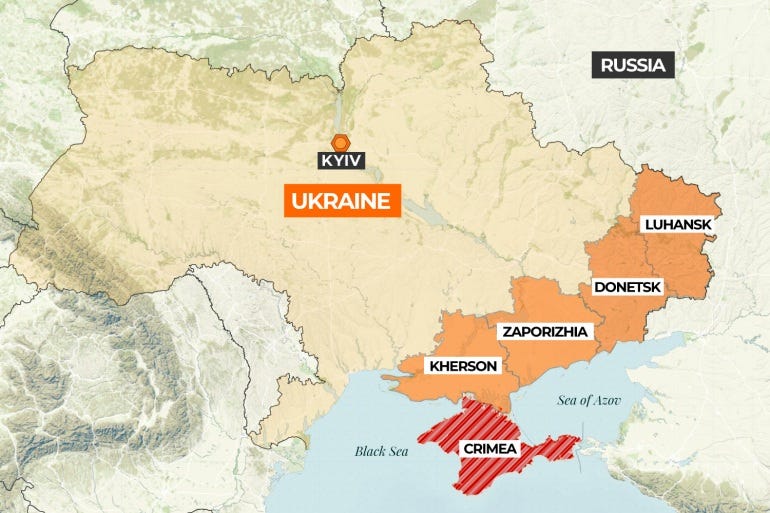
Unthinkable only months earlier, negotiations for a permanent solution to the conflict seem a real possibility now. In the spring, Ukraine made several attempts to negotiate with Russia, which NATO halted. Russia has made plenty of overtures to Ukraine of its own, all of which have so far been rejected in the face of stunning Ukrainian victories. Usually, winter brings about new negotiations in wars as both sides have time to concentrate on negotiating. Both Ukraine and Russia have reasons to negotiate with each other. Russia wants to save the few gains it has made since the start of the Invasion to prevent it from looking like a total defeat (even if it looks nothing like a victory). Russia still occupies relatively large chunks of Ukraine in the regions that it has “annexed,” and it’s unlikely that it’ll just withdraw from these, as was the case in Kherson.
Meanwhile, Ukraine has other reasons to negotiate. It no doubt wants to end the rocket bombardment that has wreaked havoc over Ukraine’s infrastructure over the last several weeks. Meanwhile, Ukrainians are nervous about the possibility of an invasion by Russian ally Belarus, with which it shares a long border. However, Ukraine’s leaders have other, more positive reasons to negotiate. They’ve promised to return all occupied lands to Ukrainian control and make an agreement with Russia that will force it to withdraw from some of these lands in return for some settlement. Maybe they can go as far as planning a resolution to the conflict altogether. Analysts have in recent days come up with many possible things that Ukraine can do in return for getting more territory back, such as re-instating recognition of Russian rule over the Kuril Islands and Chechnya (since the start of the Invasion, Ukraine’s government has declared Russian rule over these regions “illegitimate). While ultimately, we can’t be sure of what Ukraine will do, it’s likely that negotiations are already underway, and possibilities such as these are already being discussed. Perhaps they will lead to a resolution that will ultimately come about in the coming winter months.
References:
https://encyclopedia.ushmm.org/content/en/article/world-war-ii-in-europe-1
https://www.aljazeera.com/news/2022/11/11/how-far-are-negotiations-between-russia-and-ukraine
https://www.britannica.com/event/Operation-Barbarossa
https://www.britannica.com/place/Poland/The-17th-century-crisis
https://www.casematepublishers.com/against-the-deluge.html
https://www.cnn.com/2022/11/10/europe/russia-withdrawal-kherson-ukraine-analysis-intl-hnk
https://www.history.com/news/napoleons-disastrous-invasion-of-russia
https://www.iwm.org.uk/history/operation-barbarossa-and-germanys-failure-in-the-soviet-union
https://www.newworldencyclopedia.org/entry/French_invasion_of_Russia
https://www.nytimes.com/2022/11/10/us/politics/biden-ukraine-russia-diplomacy.html
https://www.politico.com/news/2022/11/14/u-s-ukraine-milley-negotiations-00066777
https://www.washingtonpost.com/national-security/2022/11/05/ukraine-russia-peace-negotiations/
Image Sources:
https://www.aljazeera.com/news/2022/9/21/mapping-the-ukraine-regions-voting-on-joining-russia